Projects

Three in my studio,
one at a client's.

The best way to see how I work is in these tanks: lots of plants, inhabitants that suit each other, and a system that stays stable for years.

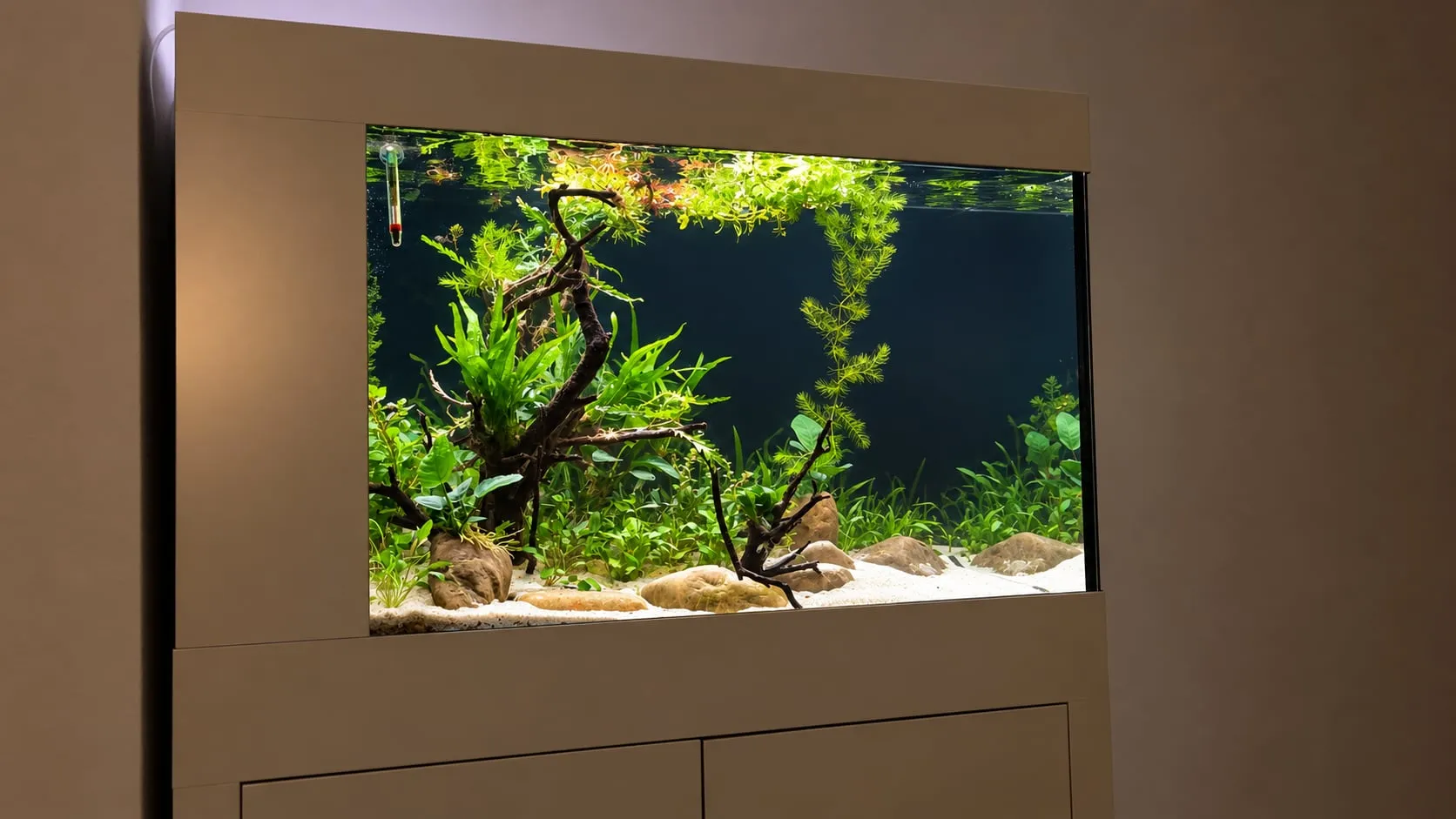
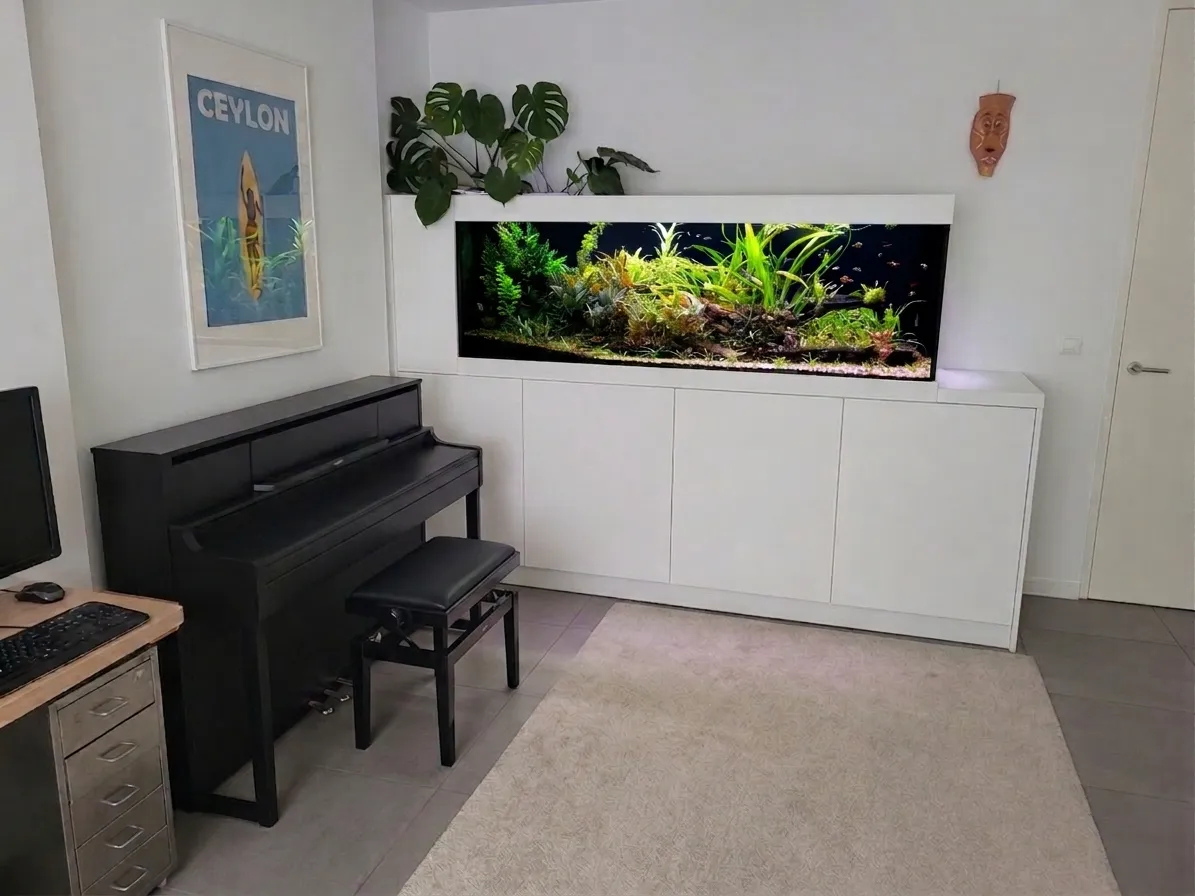
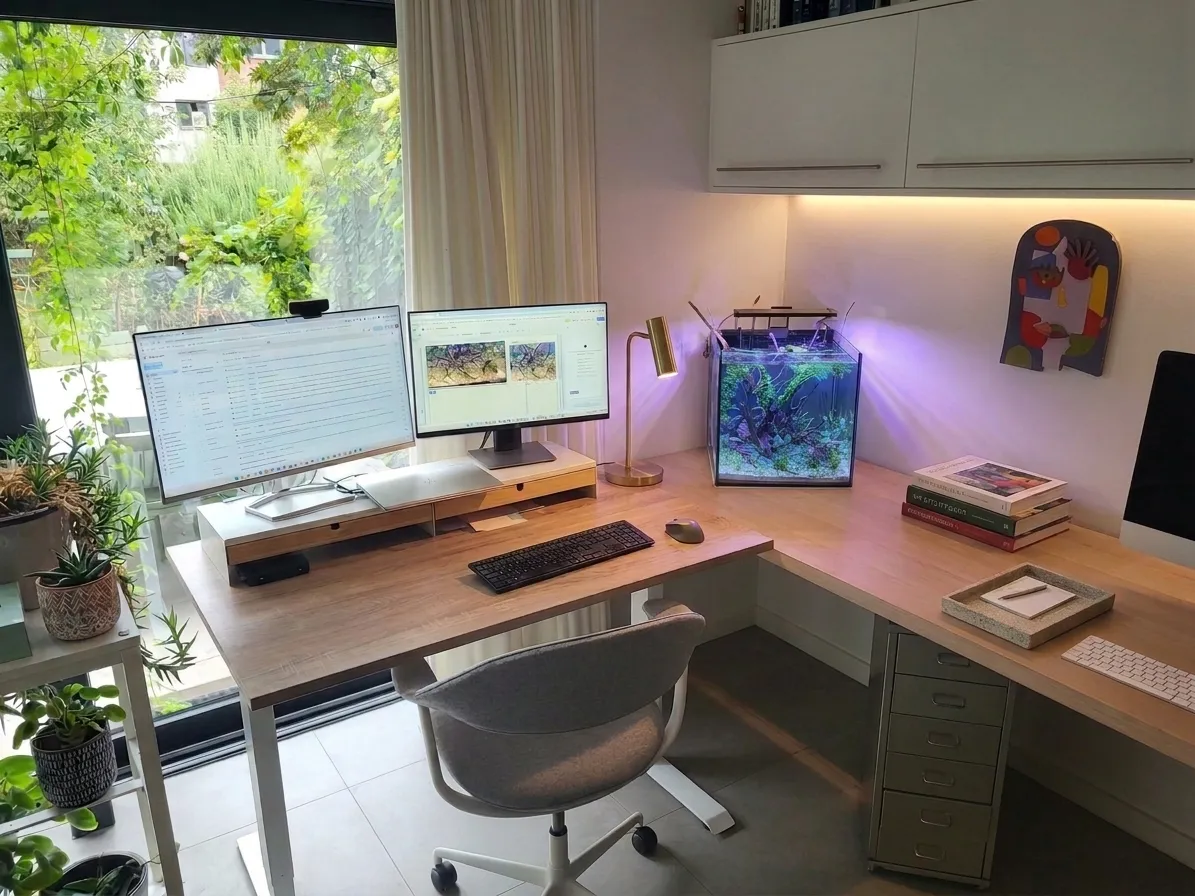
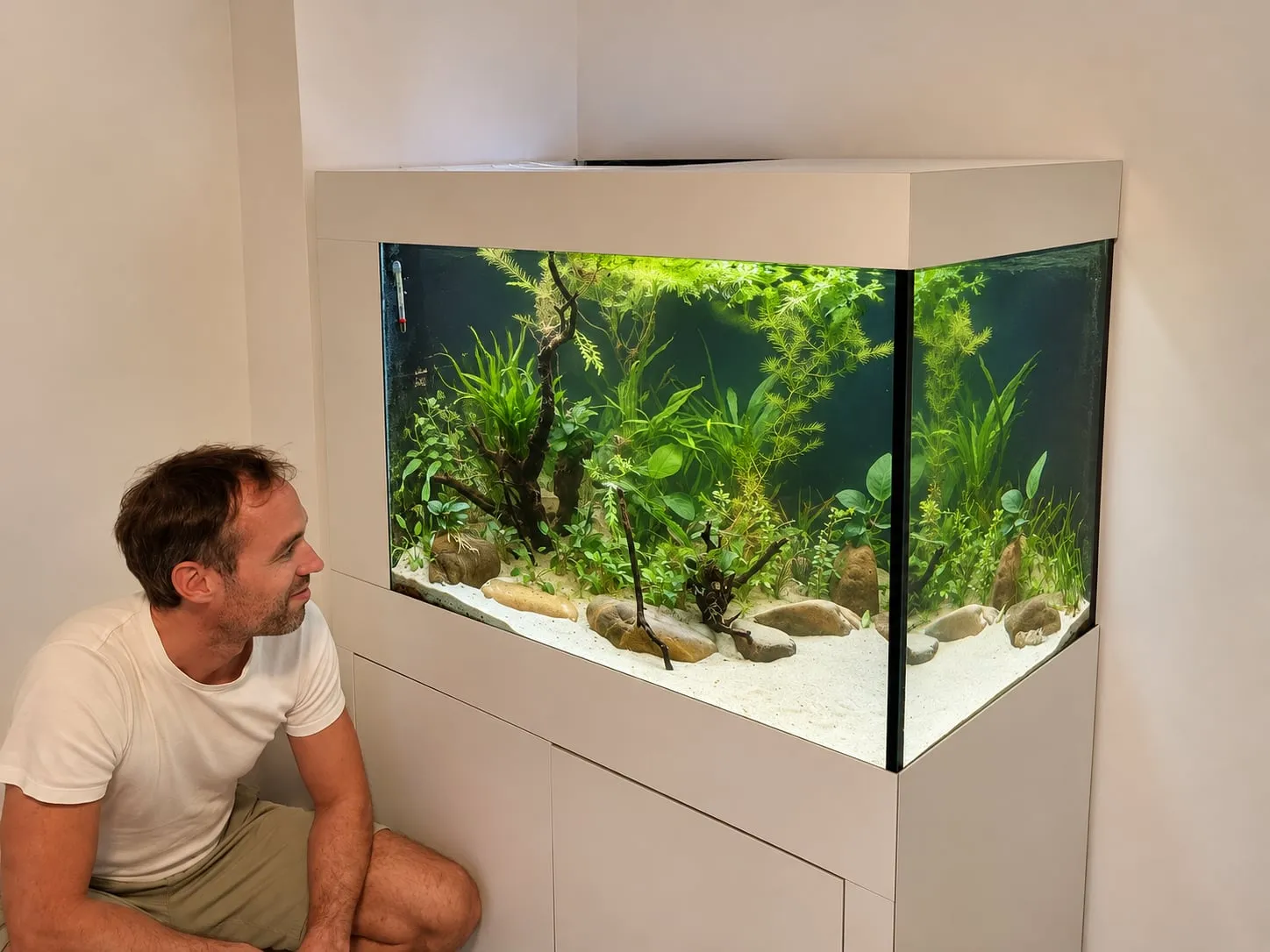
Nox in its white cabinet in the corner of the office, with someone crouching beside it

01 — Nox · Client project

An aquarium
that keeps late hours.

My first aquarium for a client: 420 litres in an office in Leuven, tuned to someone who likes to work deep into the evening.

Nox is Latin for night. This aquarium wakes later than the others: its light rises at eleven in the morning and sets at half past eleven at night. After that, a soft night light keeps the tank glowing until two, for as long as someone is still working in the office.

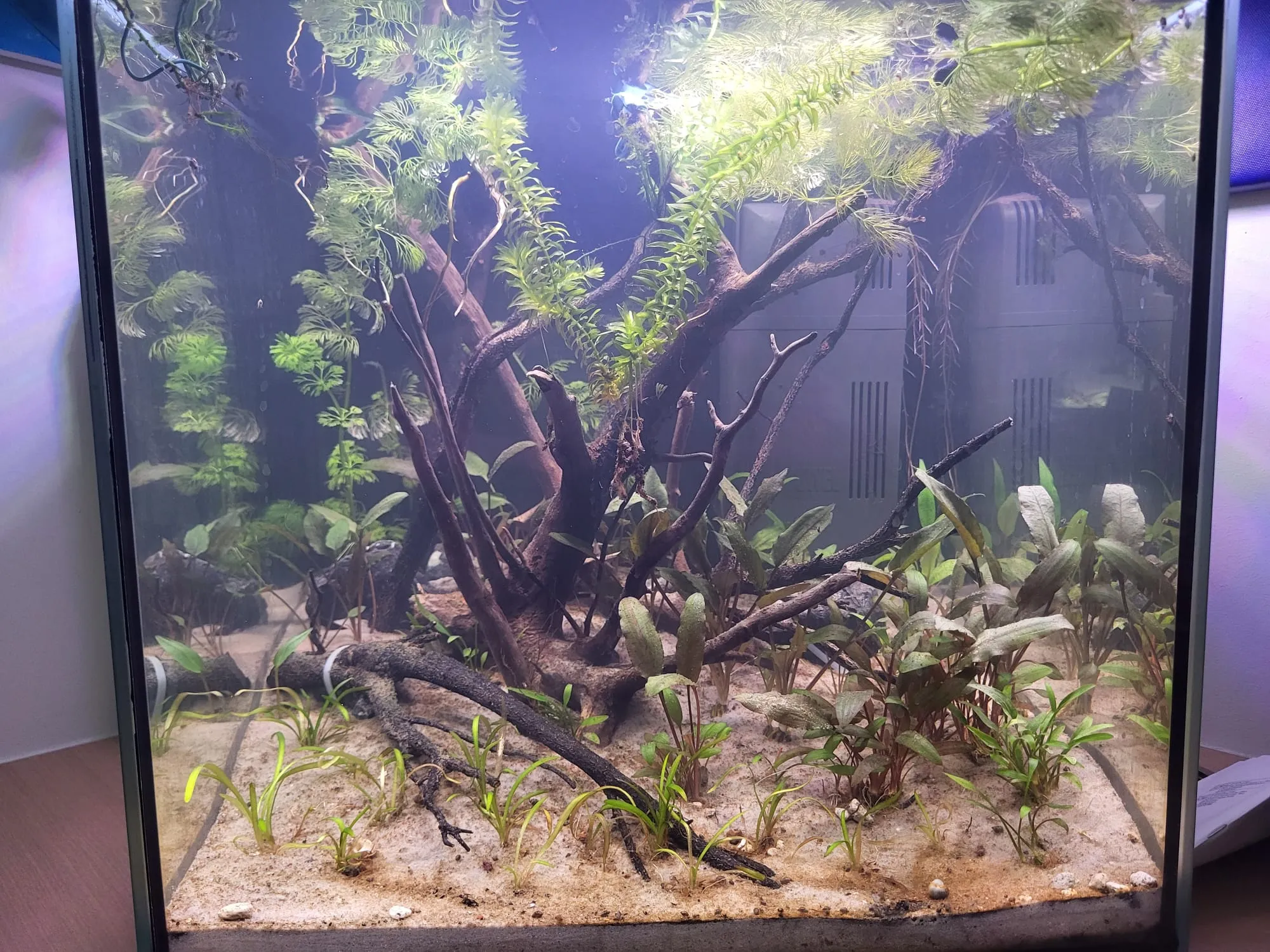
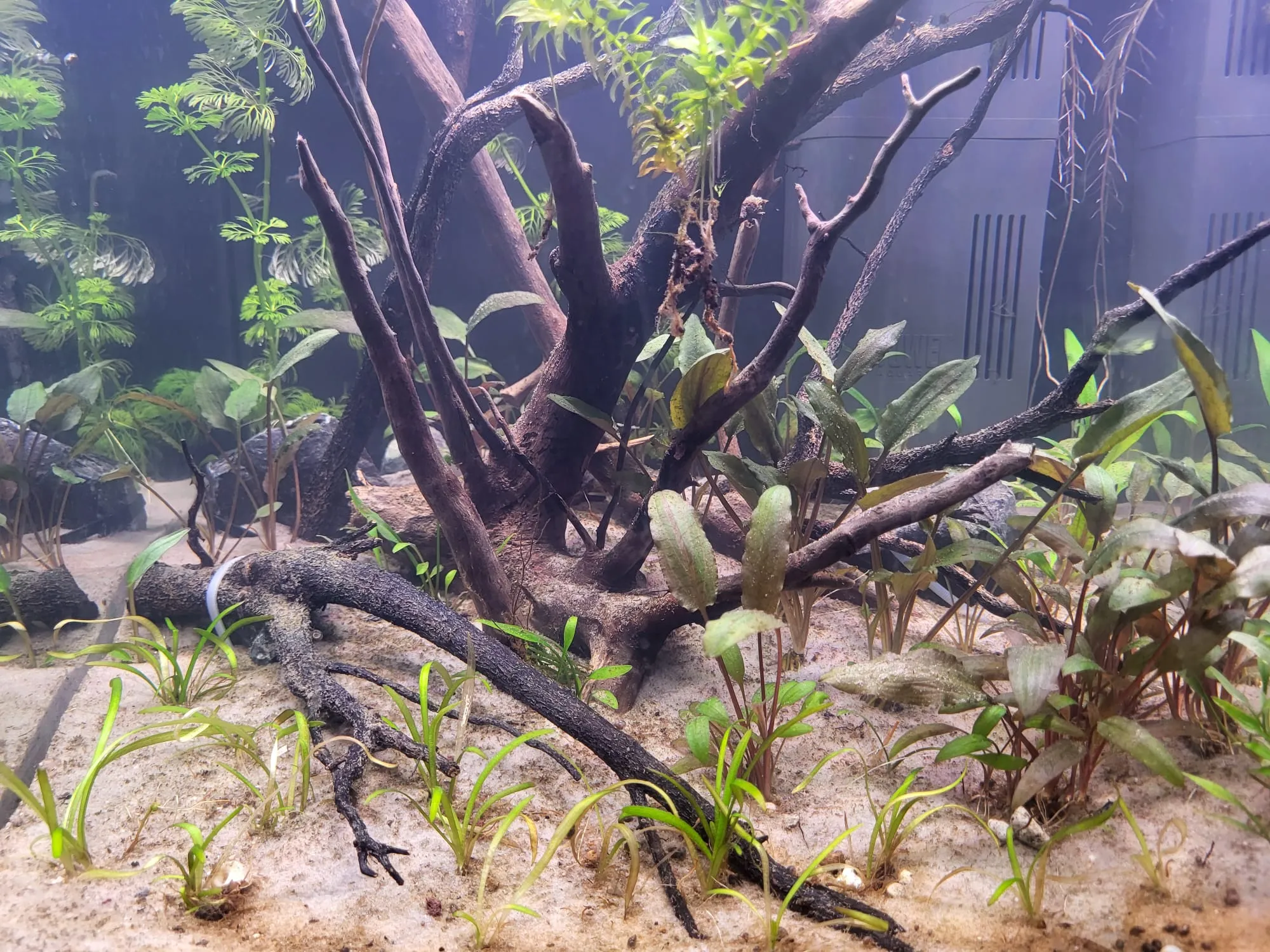
Dark wood and stones rest on a bed of several types of sand. Between them grow Java fern, Anubias and several Cryptocoryne, with Vallisneria and stem plants reaching for the surface.

The plants were grown above water and are now making the switch to their submersed form. The water still has to clear, and the turbulent first month has begun. For now only bacteria live here; snails and fish will follow later.

This tank was installed in October 2026. In the journal you can follow how it settles.
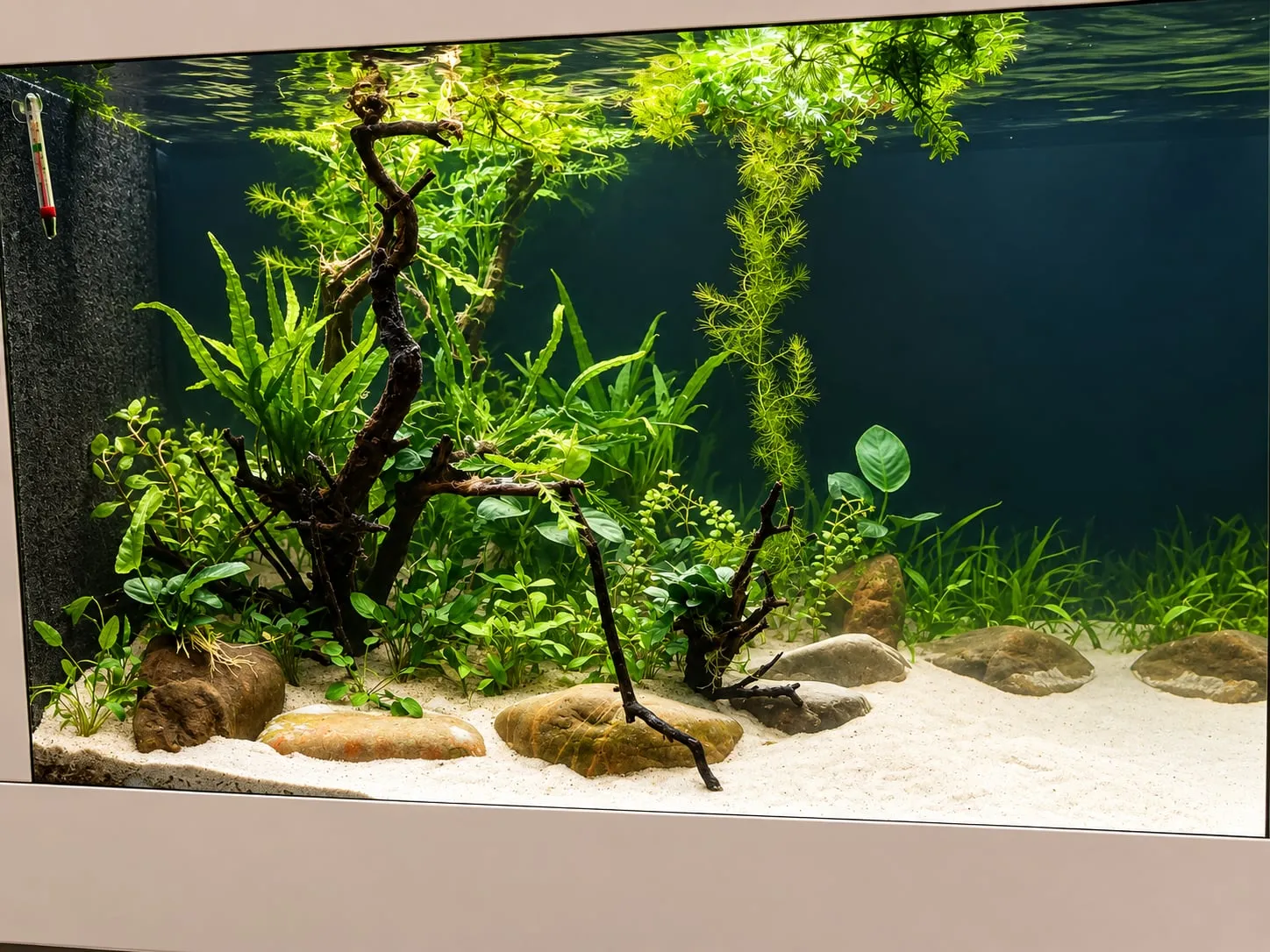
The whole foreground is now a white sand front below the driftwood and the planting

02 — Fallen Forest · Studio

A forest floor,
brought underwater.

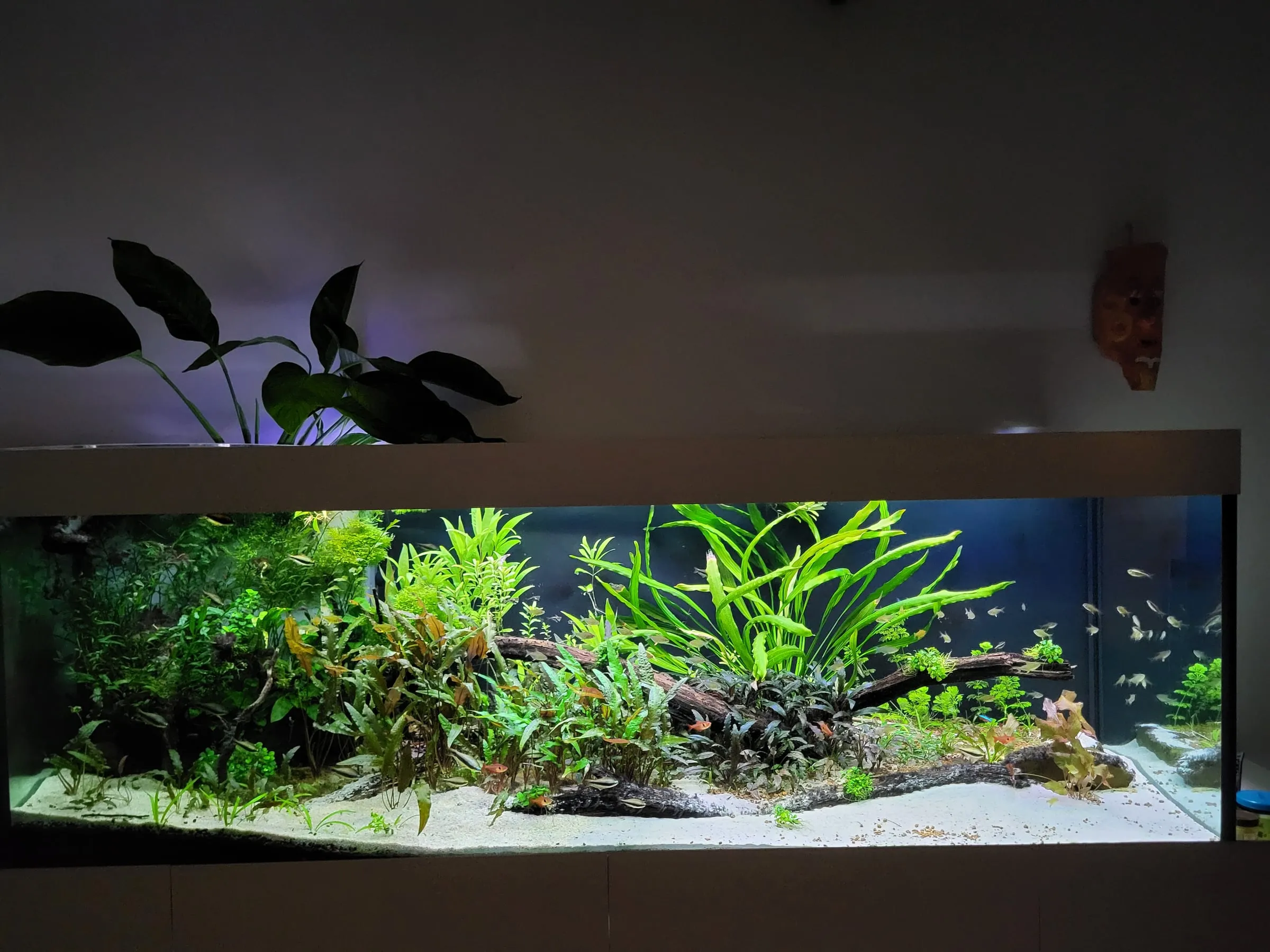
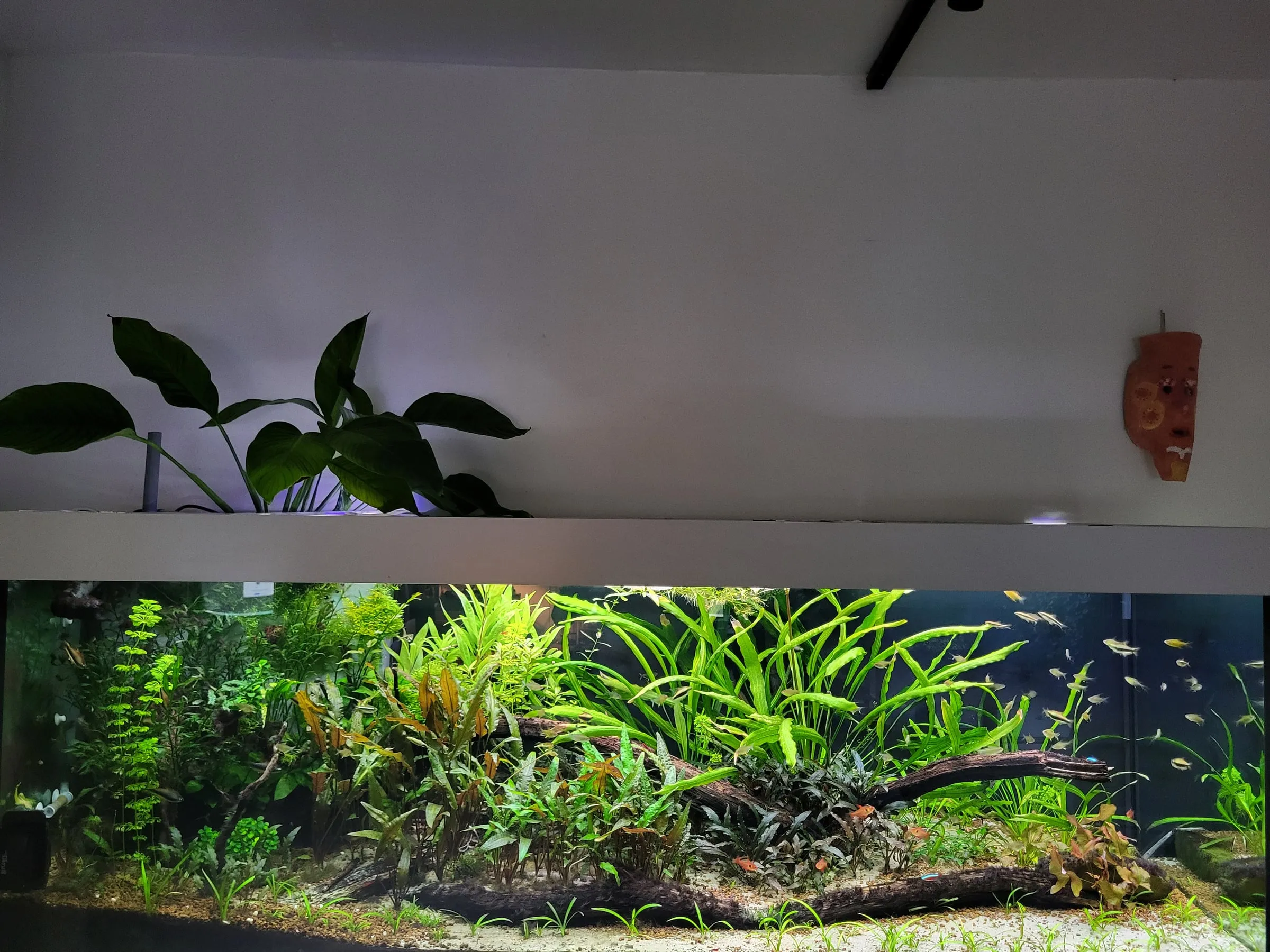
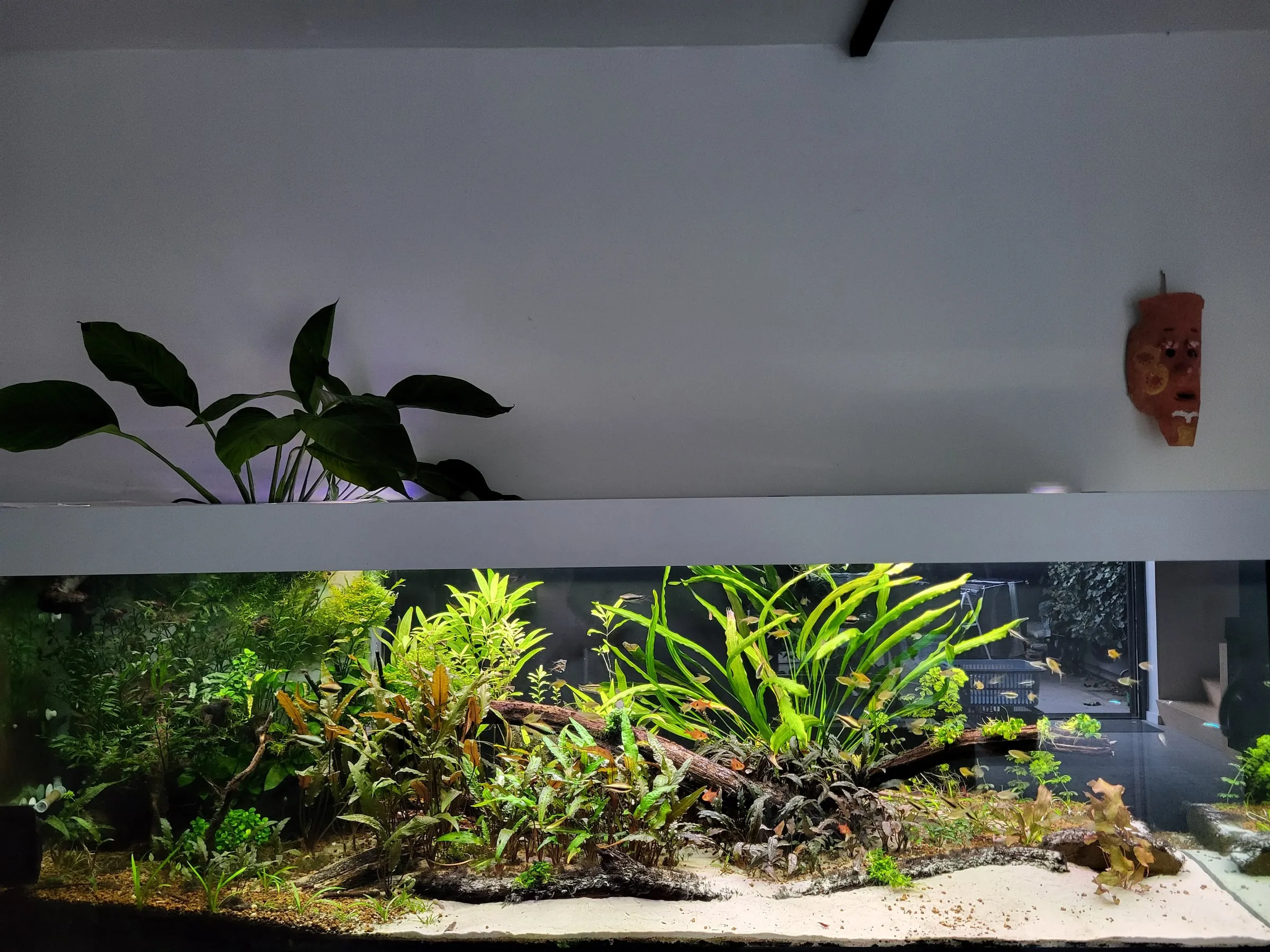
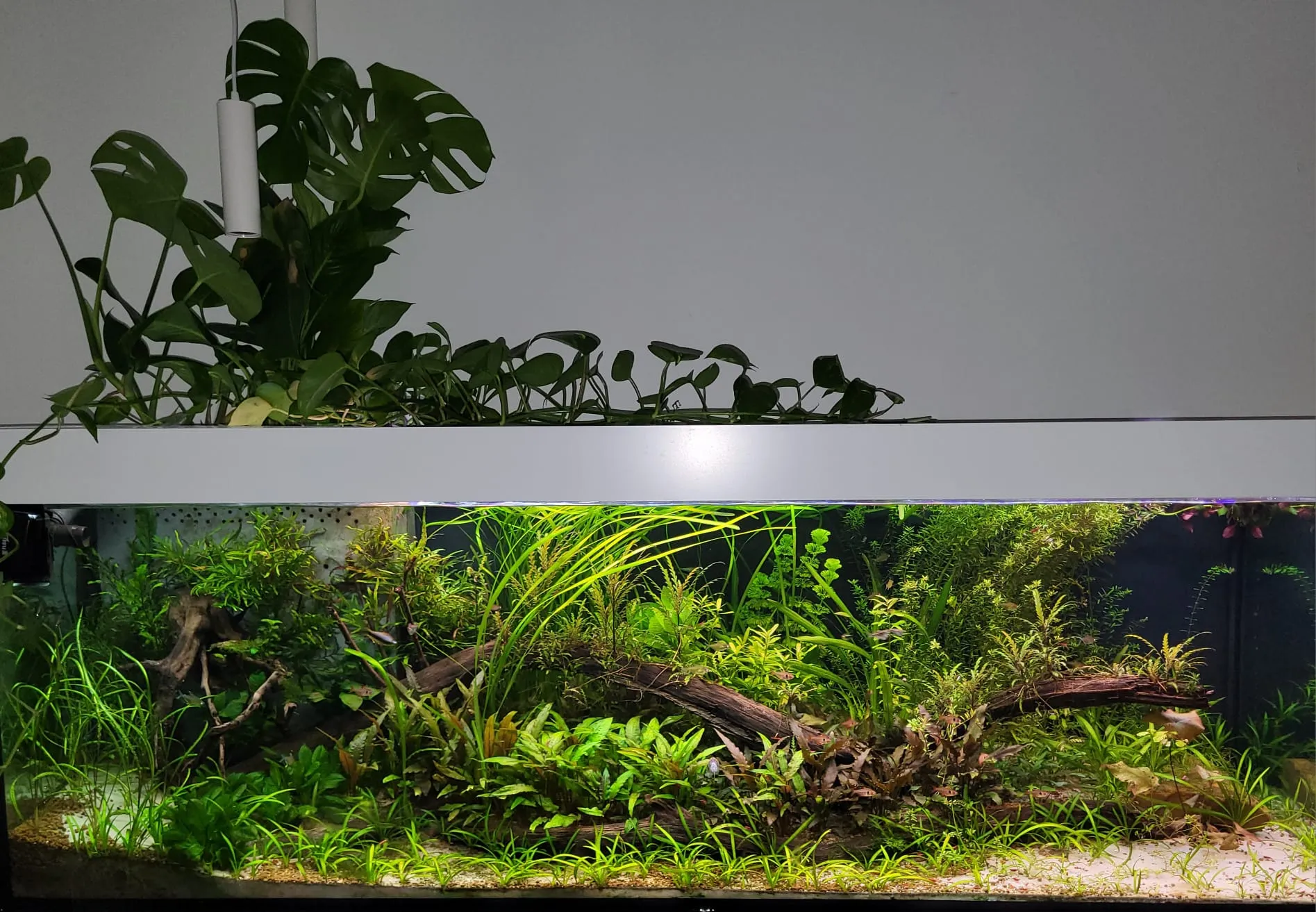
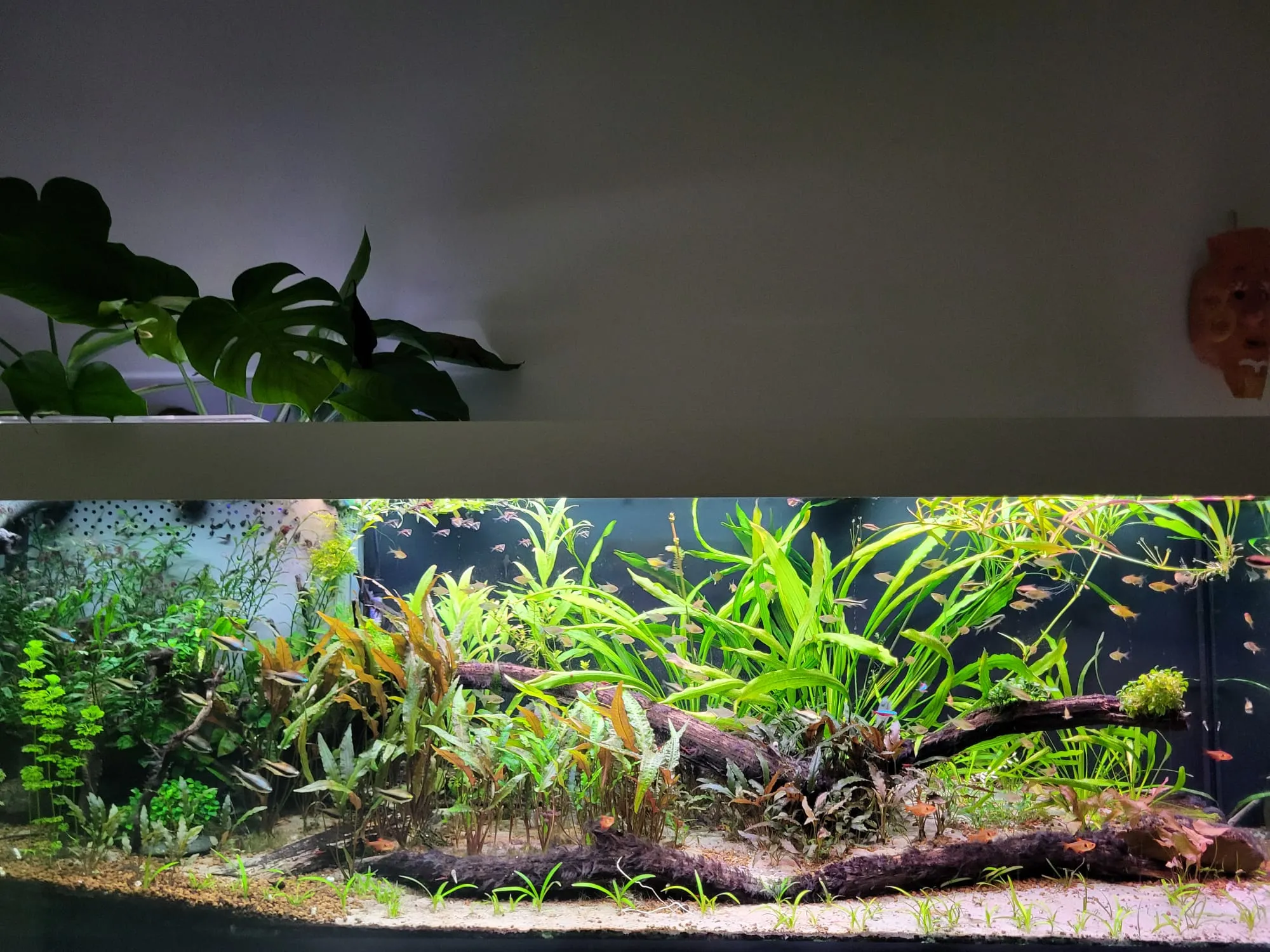
A two-metre, 1,000-litre aquarium in the living room, inspired by a fallen tree in a tropical forest and the dense vegetation that grows around it.

The layout follows that fallen tree: open spaces between the branches, different layers of vegetation, and life around wood and leaves that slowly break down.

Large groups of lemon tetras, emperor tetras and hatchetfish bring movement to the open water, each occupying a different part of the water column.

The tetras move through the central spaces between the branches and vegetation, while the hatchetfish remain close to the surface. Corydoras constantly explore the lower layers, sifting through leaf litter and substrate in search of food.

Above the water, Monstera and Pothos grow out of the aquarium, drawing nutrients directly from the water. Shrimp, snails and microorganisms occupy the less visible layers of the ecosystem, processing organic matter and contributing to the system's nutrient cycles.

The tank has been running since 2023. Plants grow, populations change, and the whole thing matures a little more every year.

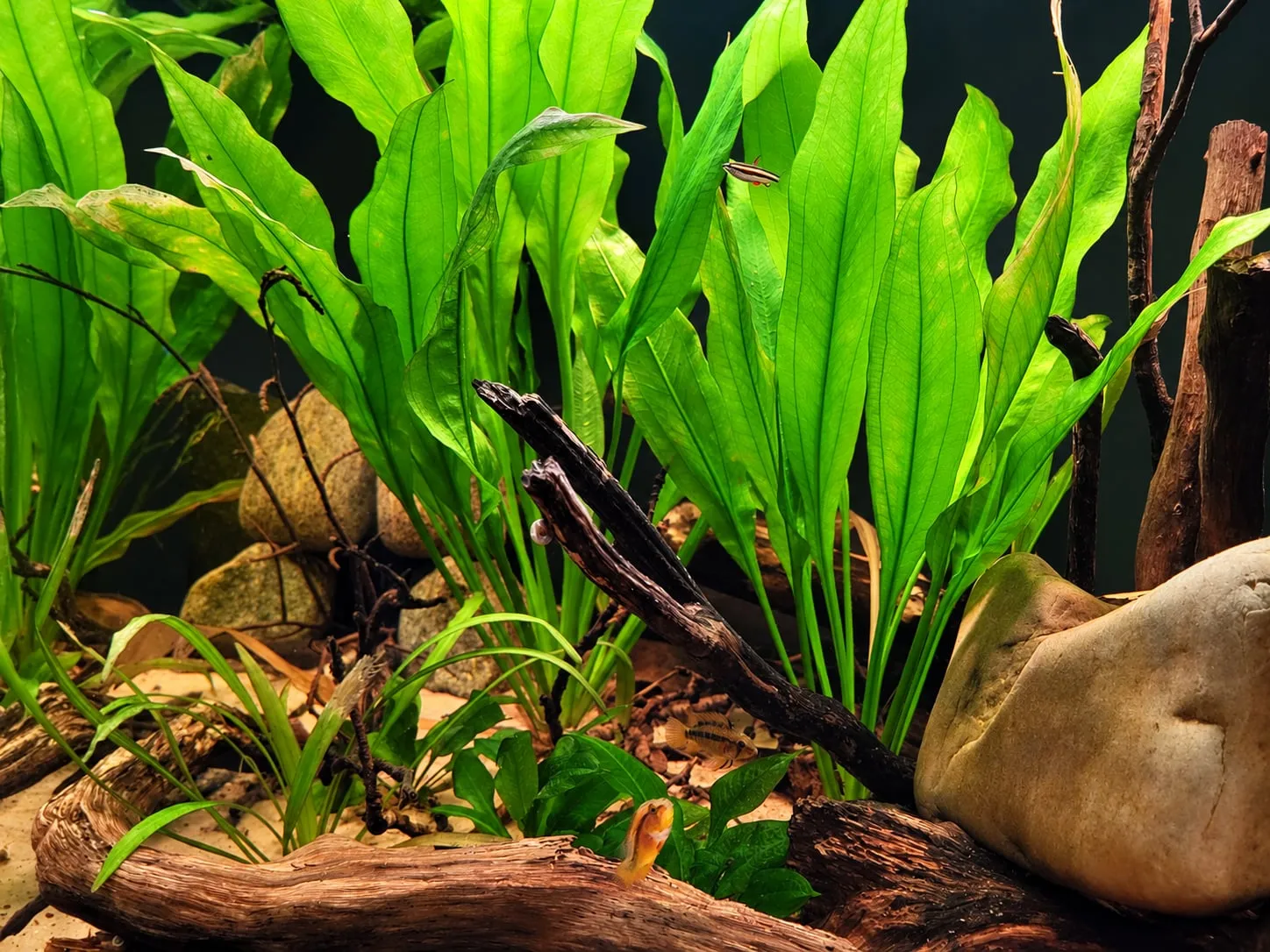
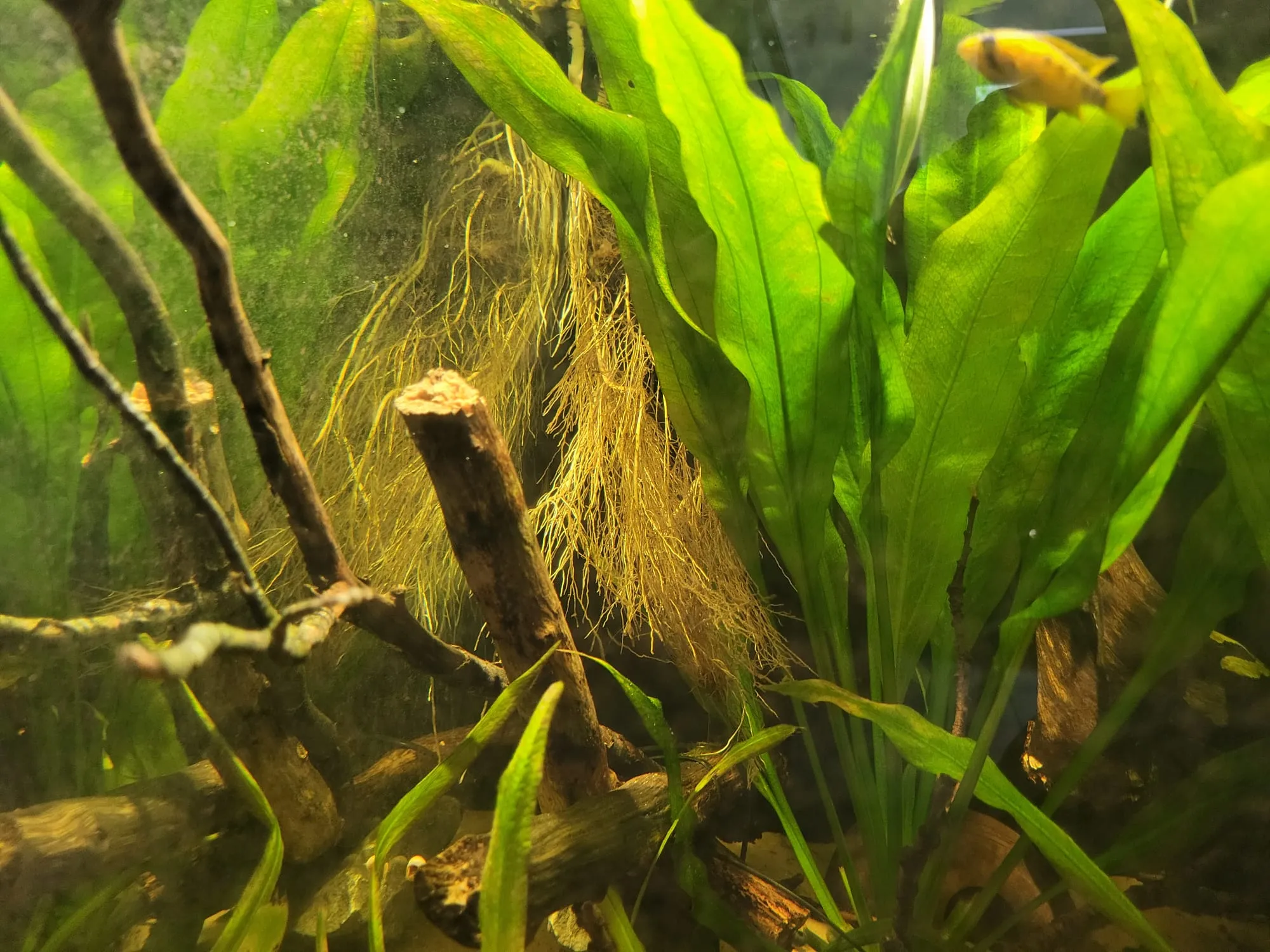
Echinodorus with fresh green leaves above wood and round stones, with two Apistogramma between the branches

03 — Orinoco-inspired littoral zone · Studio

Where land
meets water.

An aquarium modelled on the shallow banks of the Orinoco basin, where land, water and plants merge into one another.

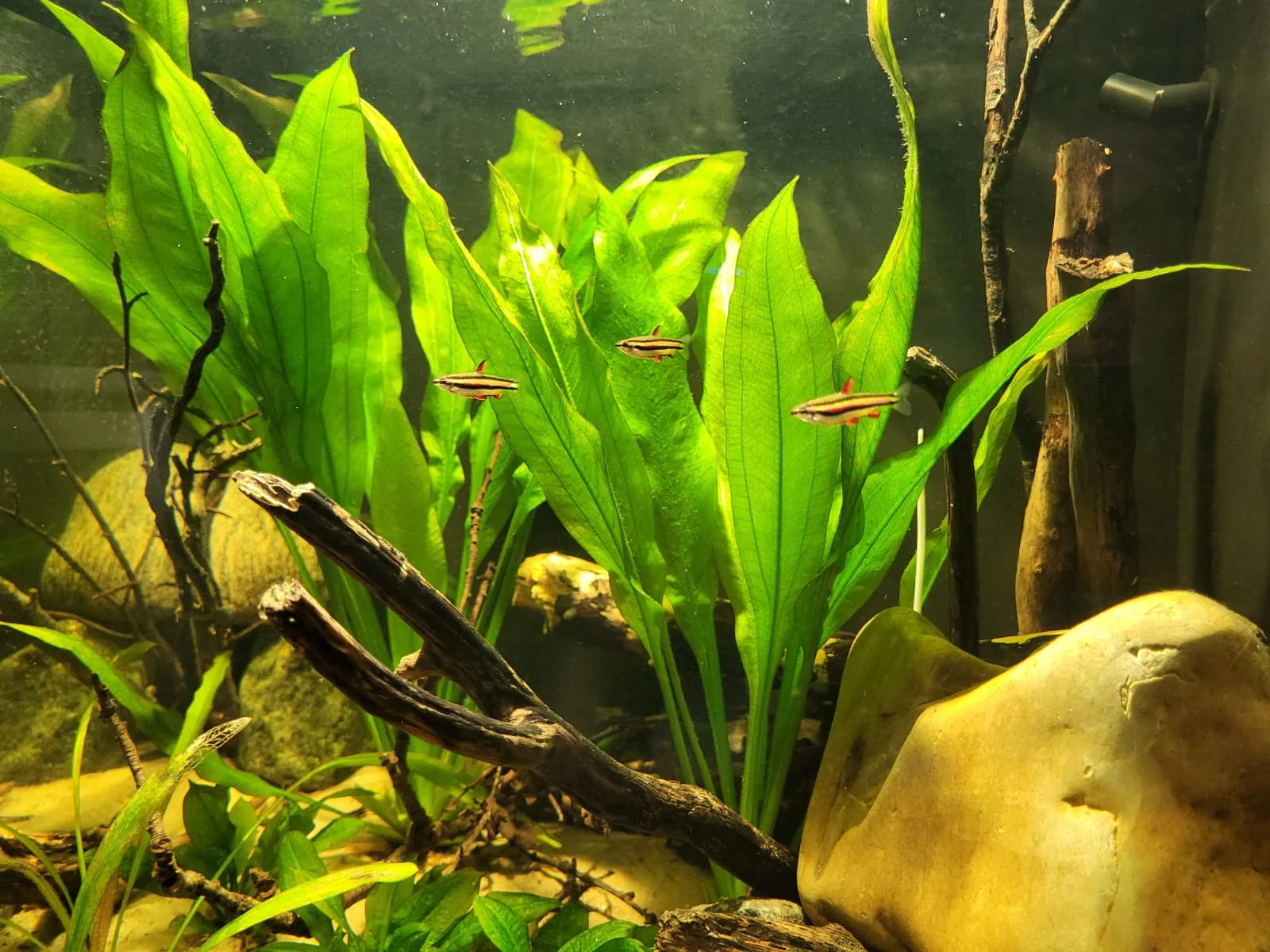
Inspired by the quiet, tannin-rich waters of the Orinoco basin, this Microcosmos brings a fragment of the transition between land and water indoors. Long-leaved aquatic plants, riparian vegetation, fallen leaves and wood create a layered landscape where water and land flow into one another.

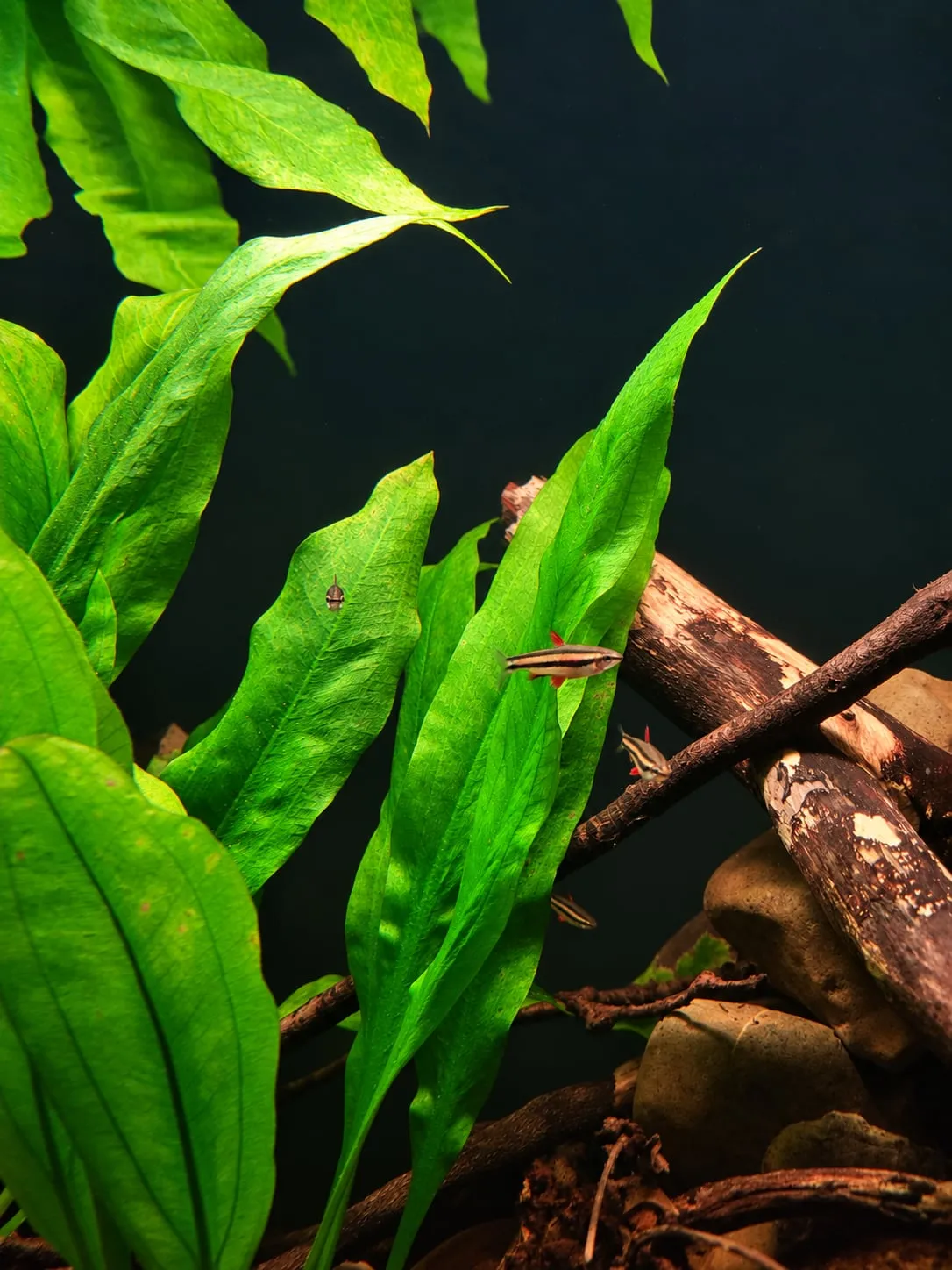
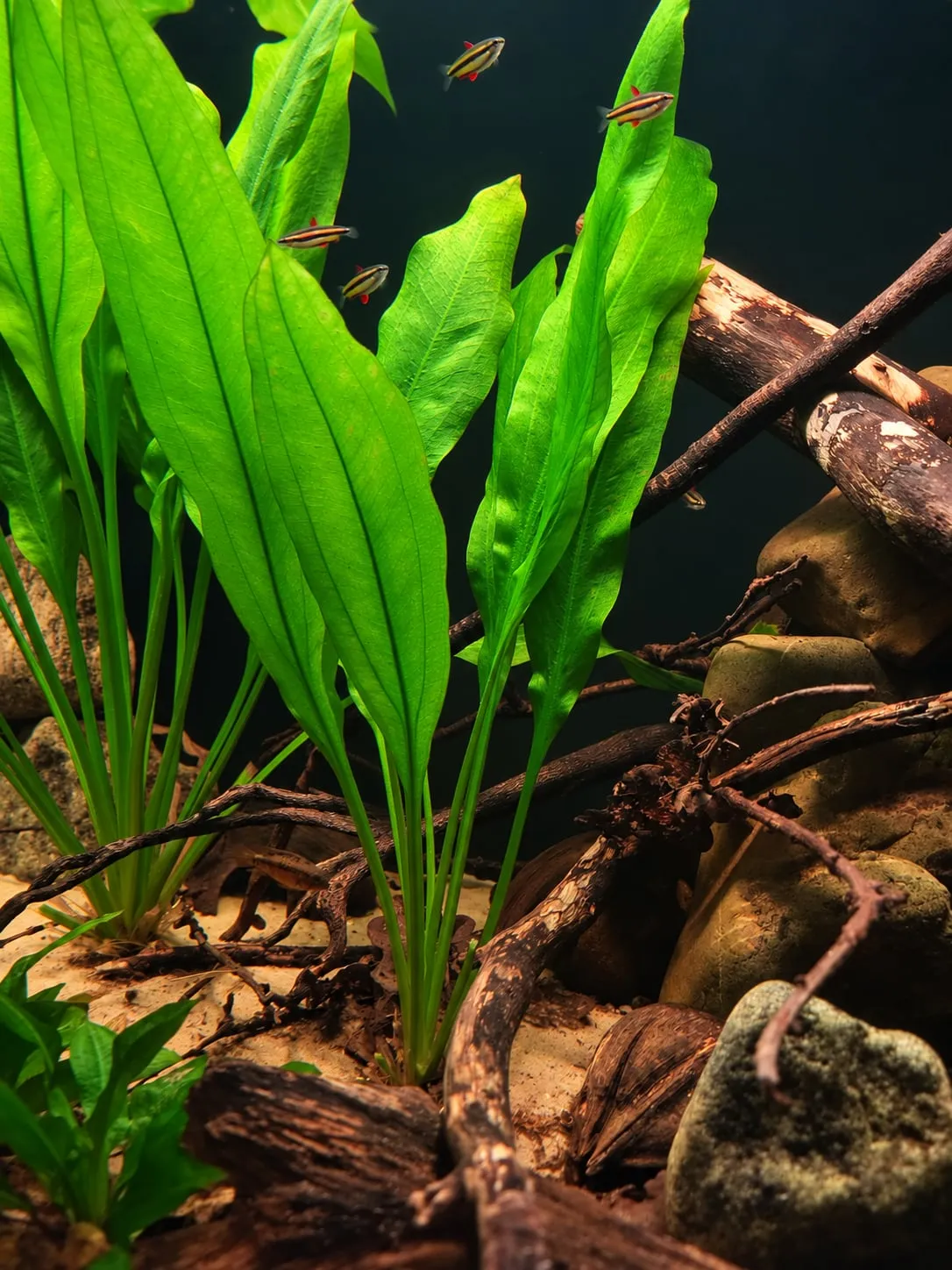
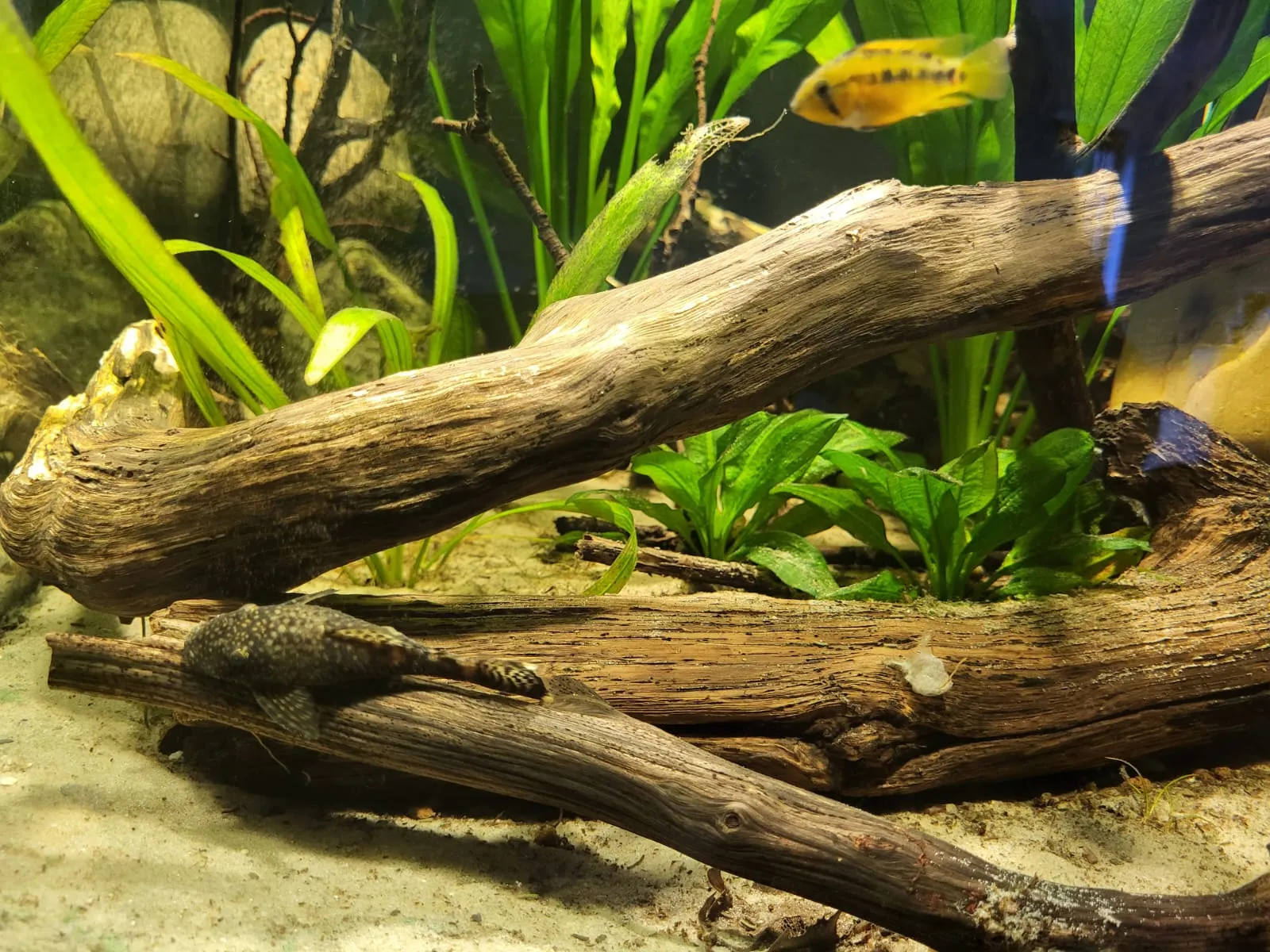
In the open water, Nannostomus marginatus move gently among the vegetation. They hang almost motionless in the water, just below the surface. Closer to the substrate, Apistogramma viejita explore the spaces between leaves and wood, constantly investigating their surroundings and sifting through the fine substrate for food.

Between those layers, Ancistrus move slowly over wood, leaves and plants. Each species has its own place and behaviour in the tank.

The result: a calm, warm aquarium where something is always moving.

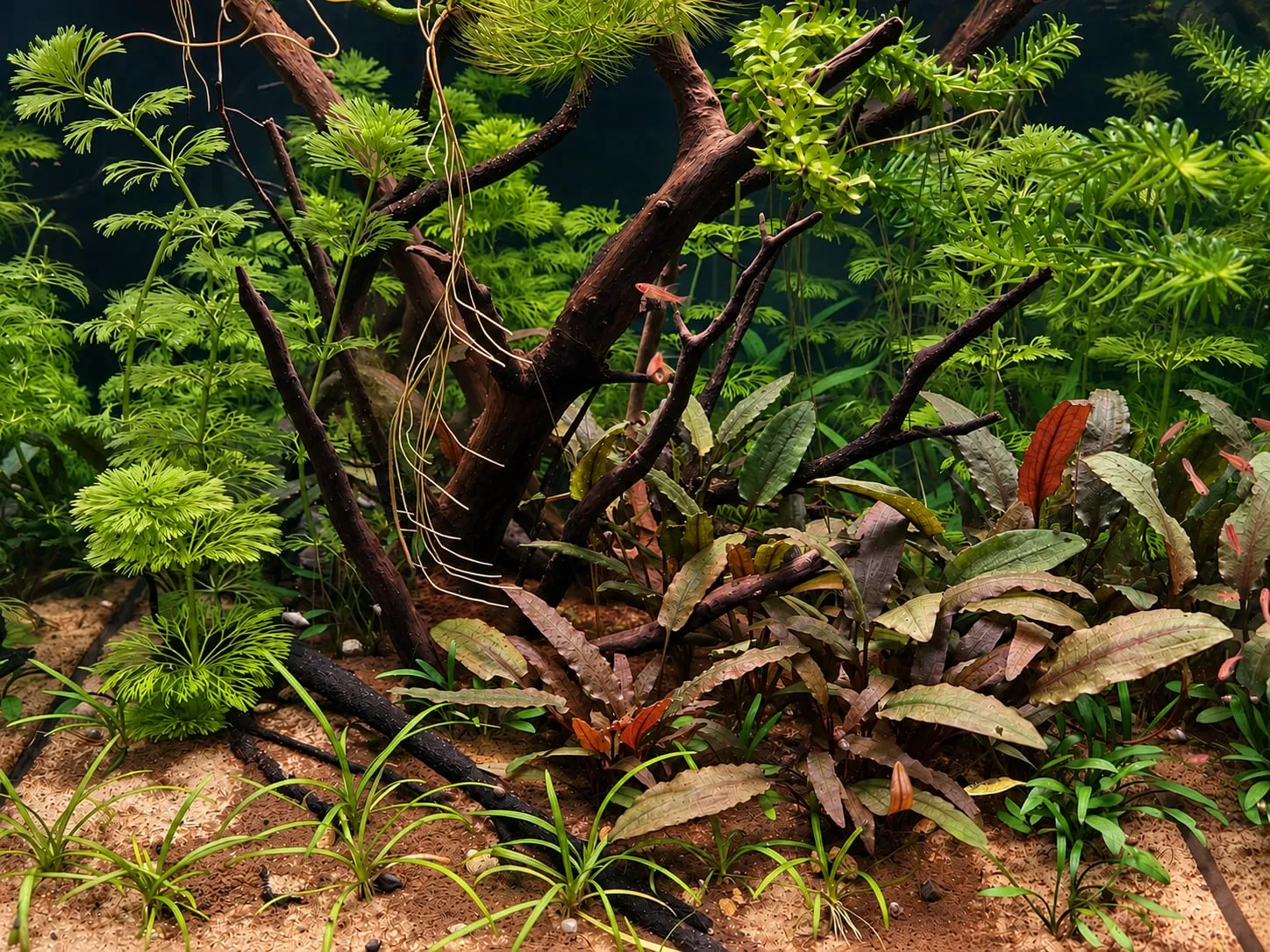
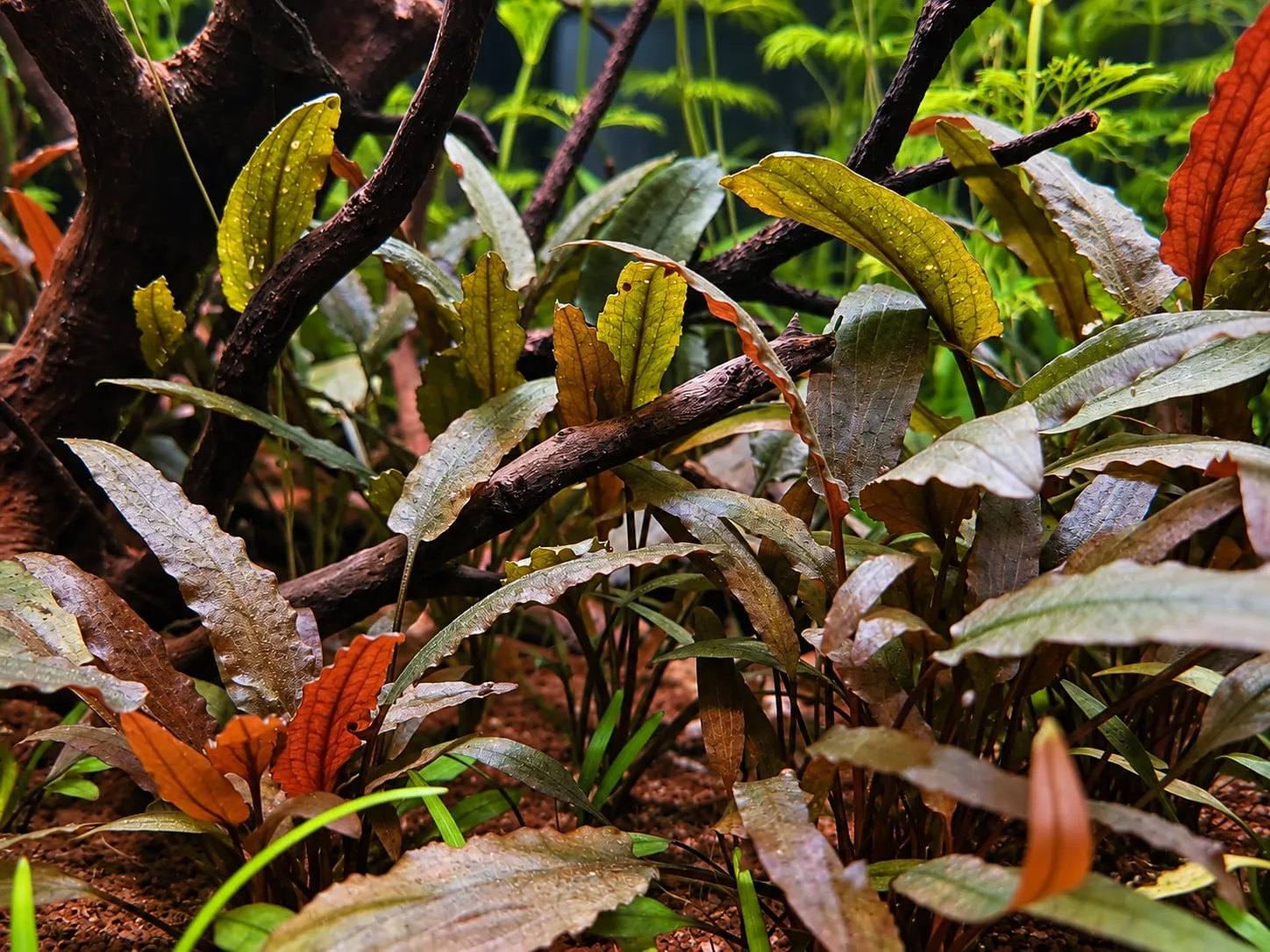
Overview of the nano: branching wood among fine stem plants, with green, brown and red Cryptocoryne on the bottom

04 — Borneo Understory · Studio

A forest
beneath the water.

A nano aquarium, inspired by the forest floor and the shallow streams of Borneo.

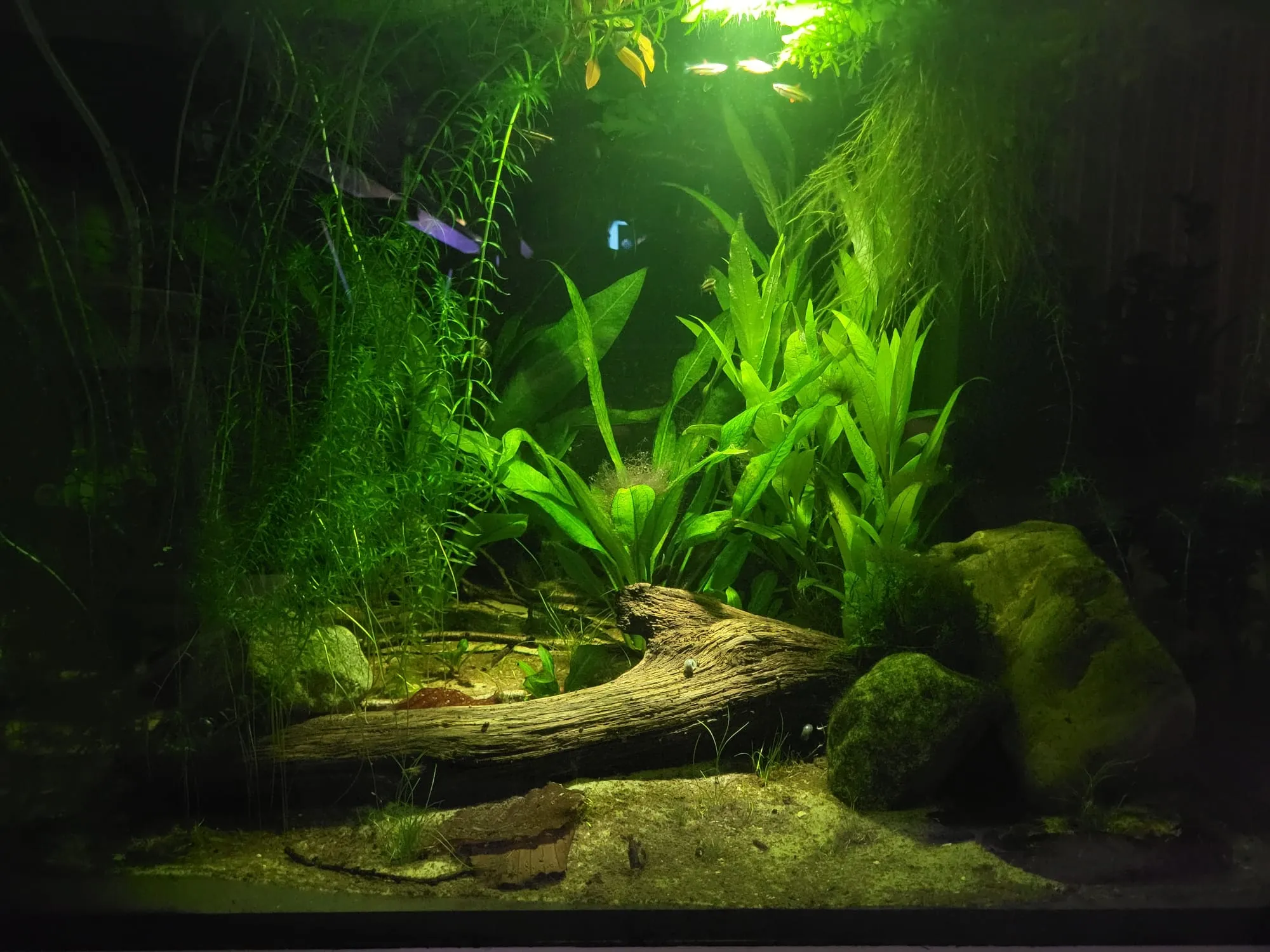
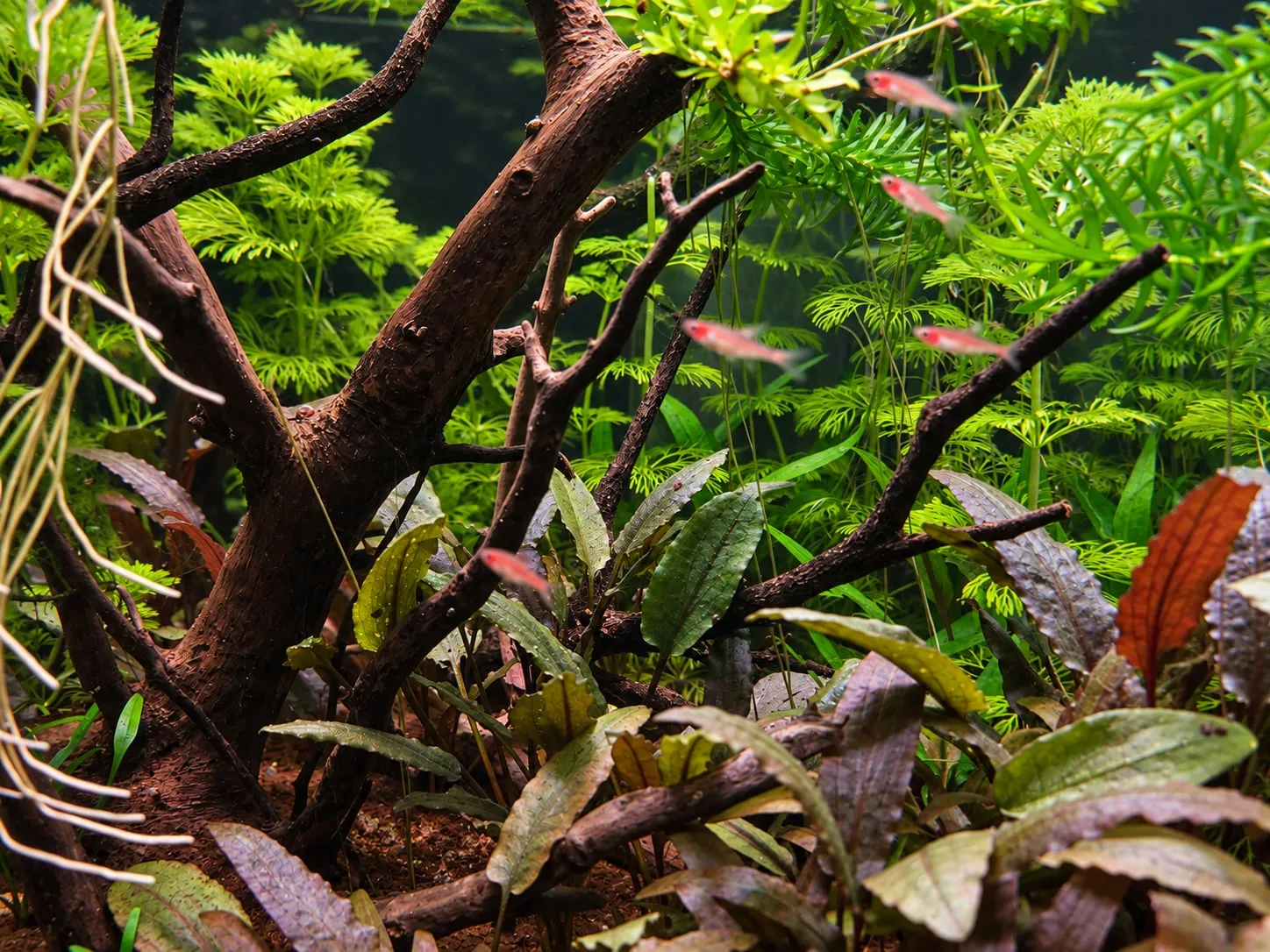
A network of fallen branches and roots creates a dense three-dimensional structure, while Cryptocoryne and other low-growing plants emerge from the sandy substrate, giving the aquarium the character of a submerged forest understory.

The whole should feel like those tropical forests: shaded, humid and richly layered.

Small groups of Chili Rasboras move quietly between the branches and vegetation, while blue shrimp explore the wood, leaves and substrate, grazing on biofilm and microorganisms.

This tank was started in August 2026. You can follow how it grows in the journal.

Your aquarium

Perhaps the next
one is yours.

See something here you would like at home, or do you have a completely different idea? Tell me about it.

Start a conversation